


7 Days in Norway by Campervan: The Ultimate Road Trip Itinerary
The best way to explore Norway in 7 days is by road-tripping through the country in a campervan. Not only is it a unique and budget-friendly solution, but it’s also the most immersive way to experience our incredibly diverse landscapes. Cruising Norway by campervan means island hopping via ferries, making your way along breathtaking fjords, and winding your way up and down mountains before falling asleep to the sound of a waterfall.

So, if you would like to know what it feels like to live inside a postcard, yearn for a road trip that doesn’t require constant packing and unpacking, and have the freedom to explore without pre-booked check-in times looming overhead, cruising the country in a campervan is the way to go. Here’s what to know for the ultimate 7-day campervan adventure here in Norway:
Why a Campervan is the Best Way to Spend 7 Days in Norway
There are many reasons why a campervan is the best way to spend 7 days in Norway. These include:
It’s a Unique Form of Travel
You’ll find plenty of travelers who’ll be able to tell you about their travels to Norway and their various guesthouse or hotel stays; there are not so many who can say they’ve traversed, explored, and immersed themselves in our landscape in a campervan. It’s a unique and exciting experience that everyone should have at least once in their life.

It’s a Cost-Effective Solution
Some of the biggest expenses on any trip are transport and accommodation. With a campervan, you take care of both in one fell expense swoop. And, by taking advantage of our super-affordable campsites, you’ll get the most bang for your buck when traveling in a campervan.
And if you see what some of these campsites have to offer on-site, including pretty incredible activities, things like hotels quickly lose their shine. Add on the fact that you can cook your own budget-friendly meals in the camper and at our campsite’s shared kitchen facilities, and you’ve found the ultimate budget hack.
It’s a Comfortable Solution
Let’s be honest; unless you’re Bear Grylls, pitching tents in wooded areas or trying to figure out which pole goes where while the sun is setting isn’t the dream holiday of most travelers. A campervan solves all that. You don’t need to be too worried about the weather because the camper provides sufficient shelter, and you don’t need to worry about “roughing” it since you’ve still got all your creature comforts.
It’s a Convenient Solution
How many times have you left for the day only to realize you left something back home? Or how often do you wish you could just make yourself a coffee when staring down that $6 price tag? Well, with a camper, you never need to worry about that, since you’re essentially traveling with your home wherever you go.
It Provides the Ultimate Freedom and Flexibility
On an official tour, you’re restricted to someone else’s schedule. When you have to rely on accommodation bookings, you’re dictated to by pre-planned dates and strict check-in times. A campervan removes all of these restrictions and limitations.
You can now have a flexible itinerary; you can stay longer or shorter at places, add an impromptu stop, or decide to skip a place. It doesn’t matter, because you’ve already sorted a roof over your head, and there’s plenty of campsites scattered around the country that welcome walk-ins (or, in this case, drive-ins).

Planning Your 7-Day Norway Campervan Road Trip
There are a few things to consider when planning your 7-day campervan trip in Norway:
The Best Time of Year to Go
The best time of year to go on your 7-day campervan trip through Norway will largely depend on you, your preferences, and your budget. But traveling in a campervan also includes a few other considerations:
Summer (June to August)
Summer is always a favorite for those traveling in Norway in a campervan. The season means nice, mild weather conditions with high temperatures (for the Nordics, anyway).
You’ll have plenty of daylight hours (more than 20 a day!) to plan a jam-packed trip itinerary, and road conditions are practically pristine, not having been impacted by adverse weather conditions. You’ll also find all our campsites open and working at full capacity.
The only drawbacks are that these perks are attractive to all, so many flock to the country during this time. This makes summer our peak season, and with peak season also comes peak season prices (can you hear your credit card say “ouch!”?).
Shoulder Months (September, October, April, May)
Shoulder months are your way of cheating yourself into all the perks of the seasons without most of their drawbacks. For example, May and September will give you many of the same perks as summer, but at a fraction of the cost.
And April and October will give you winter perks such as spotting the Northern Lights (especially the further north you plan on traveling – Tromso, nudge, nudge, wink, wink). Just keep in mind that the shoulder months have some ambiguity to them that you’ll need to manage.

For example, April and May are typically when certain campsites and roads shut down for the winter season, and September and October are when these typically slowly start opening again.
Operating hours during these times can also vary, so you’ll need to do proper research and double-check a few things when you plan on cruising the country in a camper during these months.
Winter (November to March)
While there typically are no restrictions to driving and camping through Norway in a campervan as long as you have the right winter gear and accessories, there are a few things that can throw some spanners in the works. For example, many of our campsites are closed, along with a few of our roads.
Operating hours may be different and fewer (this counts for everything from public transport to local attractions). That being said, spending winter in Norway is an entirely different experience from a summer trip.
Suddenly, waterfalls seem frozen in time, a silky smooth blanket of snow can drape itself over the landscape, and the neon-colored Northern Lights can dance across the sky. Can’t imagine a better way of experiencing this natural beauty than immersing yourself in the landscape with a campervan.
Which Campervan Should You Rent?
For a 7-day Norway itinerary, you don’t need to go for the ultimate comfort and optimum space. So, unless you’re a family with bigger teens, a compact and economic camper should do the trick.
A 2-sleeper is ideal for solo travelers and couples, and the 4-sleepers are ideal for small families with smaller kids. These compact campers have many benefits:
They are easier to maneuver due to their size. You can zip in and out of city parking spots, drive our narrower mountain roads without any concerns, and there’s no need to begin measuring before driving through some of our older tunnels.
They are more budget-friendly. Not just in daily rental fees, but also in fuel usage.
You also won’t have any restrictions at campsites. Some sites don’t have pitches for larger campervans or motorhomes, or they charge extra for larger stands.
Just keep the seasons in mind. Although the rental agent will take care of any mandatory gear and accessories, such as snow tires during the colder months, it’s also generally recommended to go for the 4x4 compact campervan version during this time.
We also recommend sharing your trip itinerary with the rental agent, so they can also advise you on which camper will suit your plans best (Google cannot replace local insight and knowledge).

Essential Packing List for a Norway Campervan Trip
If this will be your first time traveling around the country, or simply the first time you’ll be traveling in a campervan, and feel unsure of what to pack, these are some of the essentials you’ll need:
Waterproof clothes (as in jackets, pants, and hiking boots). You can even throw in an actual raincoat for extra measure. This isn’t just to be prepared for sudden weather changes, it’s also to keep you dry whilst hiking, watching one of our impressive waterfalls that’s busy blowing mist and spray your way, or even whilst hiking a glacier.
Warm essentials (irrespective of the season). This means thermals, woolen socks, scarves, gloves, beanies, etc. This is once again not just to counter weather changes, but you also need to keep in mind that our warmest temperatures are probably not what you’re used to back home (here’s looking at you, Miami).
In the same sense, it’s also good to dress in layers here. So, irrespective of the season, always bring both t-shirts and long-sleeved shirts. This way, you can layer your chest for warmth, and also always be able to take something off or put something on as the weather changes.
Flip flops. This is also irrespective of the season. If you’re planning on using public ablutions and changing rooms throughout your trip, it’s always best to be safe than sorry.
Your swimwear (irrespective of season). You’ll be using it at our cold or heated pools, our fjords, our oceans, our hot tubs, as well as our saunas.
Sunglasses and sunscreen (also irrespective of season). You’ve not felt the glare or the sting of a sunburn if you’ve not experienced sunlight dancing across the waters of a fjord or radiating off the icy surface of a glacier.
Sleepmask if you’re planning on visiting mid-summer. You’ll be treated to over 20 hours of daylight each day. While this is great for a jam-packed trip itinerary, it can cause havoc with some people’s circadian rhythms.
A backpack (if you’re not already planning on bringing one as luggage). You will need this for both day outings as well as hikes.
A headlamp (or a flashlight). We simply prefer a headlamp since it keeps your hands free.
A quick-drying towel (trust us; you won’t want to deal with musky, moistness in the confines of a camper or a backpack).
All your chargers, cables, and power banks for your important electronic devices. Something most don’t actually know is that the colder it gets, the quicker batteries run dead. So, if you’re planning on visiting during our colder months or participating in cold activities such as glacier hikes, you’ll need to come prepared.

***A few optionals (since you’ll need these, but you can simply purchase them here upon arrival):
Reusable water bottles (Norway has great quality water straight from the taps, so you can simply refill throughout the day).
Insect repellent (an absolute must if you’re planning on visiting during our warmer months or spending a lot of time next to the water).
A Few Other Things to Consider When Planning Your 7-Day Norway Campervan Road Trip
Ensure that your itinerary matches the available daylight hours and the weather. You can’t have a jam-packed itinerary filled with outdoor activities like hiking if your trip is going to be in the middle of winter with just 4 hours of daylight each day.
It’s not just about distance; it’s about road conditions as well. A 5-kilometer stretch of paved and well-maintained highway will inevitably take much less driving time than a 5-kilometer narrow mountain road with hairpin bends. So, do your research in order to be prepared.
The one thing people often forget to take into account when planning their daily itineraries is that they completely forget to add the time spent at every stop to the daily driving time. For example, driving for 3 to 4 hours every day is easily doable, but if you add 5 stops of at least an hour each into the mix, you’re in trouble.
With a campervan, you have the luxury of having a more flexible schedule that’s not fixed around pre-booked accommodation. Still, we highly recommend that you at least have some idea of the campgrounds in the area you’re planning on being in, so you don’t spend an hour suddenly having to Google around. If you want to save yourself a lot of time, you can also refer to our handy best campsites in Norway guide.
On arrival and departure days, you need to allocate enough time for niggly admin. Don’t plan a jam-packed itinerary for day 1 when you already know it’s going to take time to go through the airport after landing, and it’s going to take time picking up the camper from the lot. The later your flight arrives, the less your first day exploration time becomes. The same goes for going back home.
The 7-Day Norway Campervan Itinerary
This Norway itinerary for 7 days allows you to pick up your rental in the capital city of Oslo, cruise the country in your camper, and loop back to Oslo for drop-off and departure. You can either use the itinerary as is or customize it to suit your specific needs and requirements, minus or plus a few different stops or activities along the way:
Day 1: Arriving in the Capital
Driving distance: +/- 51.1 kilometers (31.8 miles)
Total drive time: +/- 37 minutes
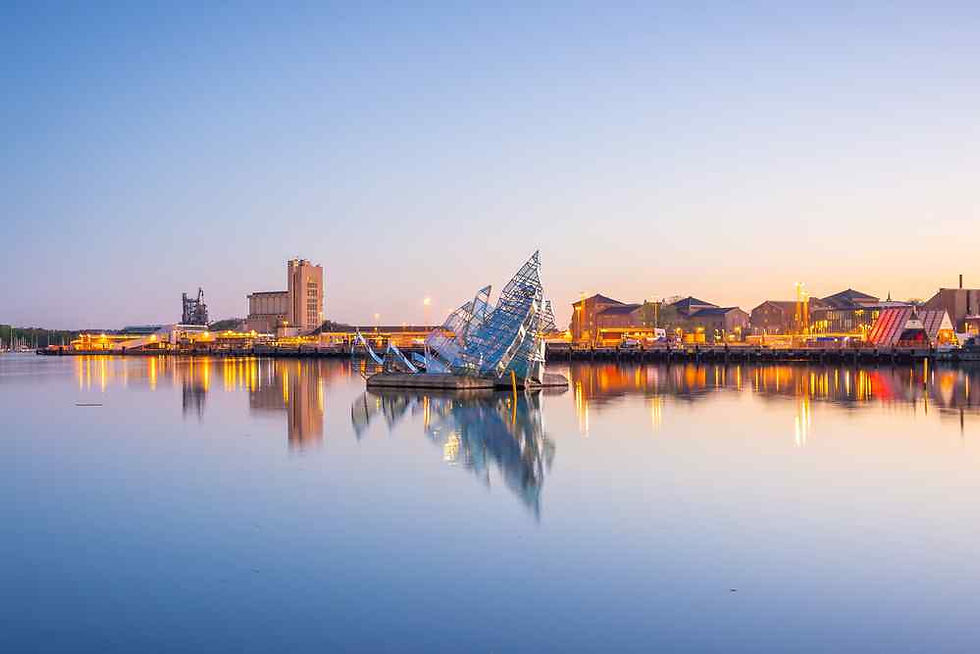
Since we have no say about your arrival time and don’t know where you’re coming from, we’ve tried to accommodate all by having a very chill first day.
Pick up your campervan rental, stock up at the grocery stores, and do some gentle exploring, depending on how much of the day (and how many daylight hours) you have at your disposal. Some of the things you can consider seeing and doing are:
Walk on the Oslo Opera House roof and take in the views.
Admire the sculptures in Vigelandsparken.
Visit the Munch Museum.
Visit the Royal Palace.
Check out Holmenkollen Ski Jump.
Overnight at: Topcamp Ekeberg, if you’d like to be within walking distance of the city centre and are planning a summer trip (Ekeberg is only open from mid-May to mid-September). Alternatively, you can camp at Topcamp Bogstad, which is open all year round and is just a 15-minute drive or 30-minute bus ride to the city centre.
Day 2: Oslo to Bergen (Via Flam and Aurlandsfjord)
Driving distance: +/- 490 kilometers (304 miles)
Total drive time: +/- 7 hours, 21 minutes

Today is going to be a long drive, so you'd better set that alarm for pretty early. You’ll be traveling north-west to Aurlandsfjord (you can literally just enter Aurlandsfjord into your GPS). From here, you’ll GPS your way to Flam and then Bergen.
Some of the recommended stops (as well as the record-breaking tunnel you have to go through) along the way are:
Lærdal Tunnel (right before you reach Aurlandsfjord, you’ll drive through this tunnel that’s officially credited as Norway’s longest road tunnel, clocking in at a staggering 24.5 kilometers!).
Stegastein Viewpoint (giving you the best view of Aurlandsfjord).
Flam (it’s very tempting to stay at this picturesque little village for a looooong time, but keep your driving time in mind!).
Bergen (the second-largest city in Norway). Please do not miss out on the Floibanen Funicular, and taking a stroll along the colorful houses of Bryggen is an absolute must.
Overnight at: Lone Camping AS
Day 3: Bergen to Alesund
Driving distance: +/- 424 kilometers (263 miles)
Total drive time: +/- 7 hours, 2 minutes

Today is yet another long drive (but that’s the price one has to pay for taking in as much of the country as possible, right?). Besides, it’s going to be a beautiful cruise along the west coast via the E39. This road connects Stavanger with Trondheim and takes you past many fjords and islands along the way to Alesund.
Although the actual drive today will be the star of the show, we do recommend that you get an early start, so you still have enough time to explore Alesund (referred to as the Venice of the north). These are some of the things we recommend you see and do in Alesund:
Hike up Mt. Aksla (it’s a steep 418 steps, but the views are worth it!).
Stroll through the Alesund streets if you appreciate architecture.
Visit the Art Nouveau Centre.
Go on a RIB Safari Boat cruise (this is a total rush and takes you out to sea where you’ll not only get to experience the vast waters, but also incredible bird and wildlife).
Overnight at: Volsdalen Camping
Day 4: Alesund to Andalsnes (Via the Infamous Atlantic Ocean Road)
Driving distance: +/- 136 kilometers (85 miles)
Total drive time: +/- 2 hours, 35 minutes
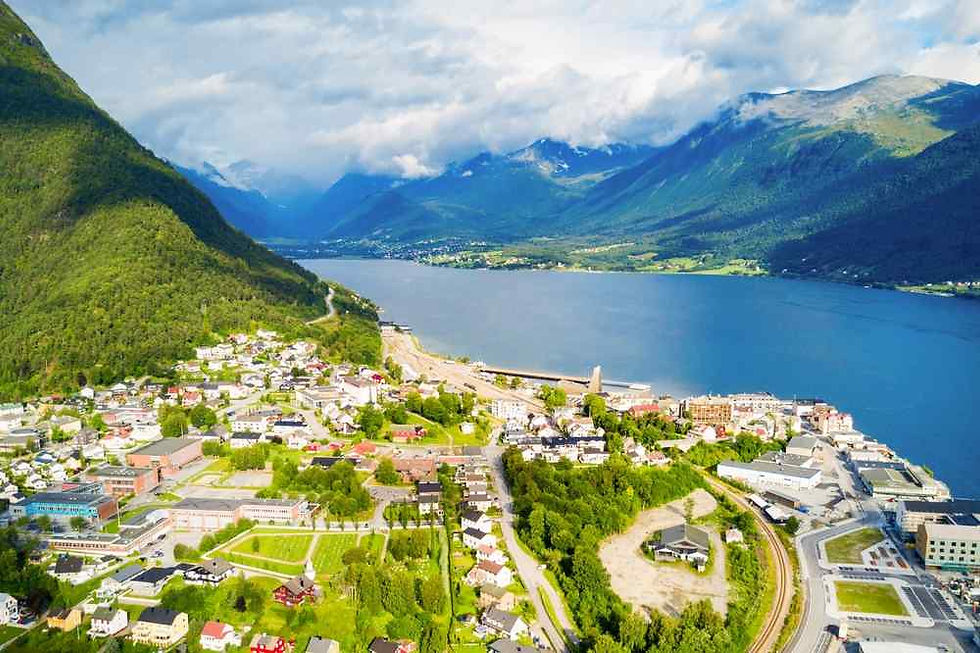
Today you’ll be cruising along the infamous Atlantic Ocean Road (an almost otherworldly engineering feat that takes you across the ocean, linking with various islands). You’ll also need to take the ferry to get to Atlantic Ocean Road from Alesund, so it's yet another interesting experience to add to the day.
You’ll travel through Molde before reaching your final destination today, Andalsnes. Except for perhaps a quick stop in Molde, the main attraction (except for the actual incredible journey itself) will be to explore a bit of Andalsnes (most famous for its hikes and breathtaking views).
These are some of the things we recommend if you have time:
Take a hike up to Rempestreken Viewpoint (this is a pretty steep hike, so probably not for beginners who are not very fit).
Overnight at: Andalsnes Camping
Day 5: To Trollstigen and Geirangerfjord
Driving distance: +/- 103 kilometers (64 miles)
Total drive time: +/- 2 hours, 18 minutes

Time to head towards Trollstigen Viewpoint. But this route is not just famous for its spectacular views. Trollstigen is a steep mountain road well known for its winding ways and hairpin bends (so this is not the place to get entirely lost in the scenery around you).
Along the way, you’ll cross a bridge over one of our impressive waterfalls, Stigfossen. From the viewpoint, you’ll be heading towards Geirangerfjord, a UNESCO World Heritage Site.
Stop at Ornesvingen Viewpoint for the most beautiful eagle eye view of the fjord, Geiranger village, and the Seven Sisters waterfall. Depending on the time you have available, consider the following in the Geirangerfjord area:
Geirangerfjord boat rental (explore the fjord up close).
Take a hike to Skagefla Farm (this is a long one, taking around 5 hours, so ensure you have enough time before taking it on).
Go on a Geirangerfjord Boat Cruise (when you don’t want to be in charge of the boat yourself).
Dalsnibba Viewpoint (this one can literally have you feel like you’re on top of the world, especially when the clouds roll in).
Overnight at: Folven Adventure Camp
Day 6: Traveling to Hemsedal (Via Loen)
Driving distance: +/- 293 kilometers (182 miles)
Total drive time: +/- 4 hours, 49 minutes

The setting for today’s travels has been credited as some of the most beautiful here in Norway. First stop is an almost idyllic swimming spot with magnificent views of the surrounding mountains.
To get to Oppstrynsvatnet, you’ll need to navigate to Glomnes Parking. From there, you’ll move on to the next watery adventure by visiting Lake Lovatnet (you’re allowed to swim here as well). Start by navigating to Loen, where you can easily follow the signs to the lake.
If you’d also like an eagle eye view of Loen and the lake, you can always take the Loen Skylift. Your final stop of the day is Hemsedal, often referred to as the “Scandinavian Alps.” So, if you’re visiting during the colder months, you can get in a good ski session. Depending on how much time you have available, you can also do quick visits to:
Rjukandefossen.
Overnight at: Hemsedal Fjellcamp
Day 7: Departure Day
Driving distance: +/- 216 kilometers (134 miles)
Total drive time: +/- 3 hours, 5 minutes
Sadly, you’ll be leaving Norway today. Depending on the time of your flight (and be sure to leave enough time for all the admin of dropping off the camper and checking in!), make your way back to Oslo. If you have any time to spare, you can take in a few final sights in the capital before catching your flight.
Where to Sleep Each Night: Campervan Overnight Options in Norway
In Norway, you will have a few different options when it comes to overnight options in your camper. Here’s what you need to know:
Campsite vs. Bobilplassen vs. Wild Camping
You will have the following options when it comes to staying overnight in a campervan in Norway. Many opt for a combination of all three for the ultimate convenience and affordability:

Campsites
Campsites will cost you the most, but you’ll also be getting the most. Here you can expect all sorts of amenities and facilities, from the basics like toilets and showers to laundry and kitchen facilities and much, much more (we LOVE ourselves some minigolf and kayaking).
Depending on which campsite you opt for, you’ll usually be able to use it for either a simple overnight stay or for an extended stay. Campsites with more facilities, amenities (and often entertainment options) are generally the better option for families.
Bobilplassen
These can best be described as overnight parking spots. Most have showers and toilets. Some may even have a waste dumping site. But, in general, the focus is more on the surroundings, since these are most often found in cities and towns, making exploration super easy and most of what you need just a short walk away. With fewer facilities and amenities to maintain, bobilplassen also tends to be cheaper than campsites.
Wild Camping
Wild camping is, of course, a free overnight stay option. However, our wild camping falls under the concept of our Right to Roam (Allemannsretten), which has plenty of rules and regulations you need to adhere to, especially when it comes to campervans:
Wild Camping Rules in Norway (Allemannsretten)
You are only allowed to go wild camping on uncultivated land, and you need to ensure you truly understand the meaning (uncultivated doesn’t just equal open fields). "Uncultivated" essentially means untouched by man. For example, forests, meadows, and mountains are okay (as long as they’re not private land or fall under a national park). However, farm fields, gardens, and plantations are not.
Even if you’ve strictly adhered to the above-mentioned, you’ll need to consider the 150-meter rule. It prohibits anyone from camping less than 150 meters away from someone’s residence or homestead.
You are not allowed to DIY your own roads or trails. So, if you want to go wild camping in the forest, you’ll only be allowed to go as far as the road or parking lot takes you (if you’re leaving prints behind, you’ve moved into outlaw territory). Also, remember that this counts for all 4 wheels; if you’re caught “off-roading even with just one or two, you’ve officially broken the law.
Wild camping is not an indefinite thing. You’ll only be allowed to stay in one spot for up to 48 hours before you have to move on. If you don’t, you’re officially an illegal squatter.
Wild camping is a privilege, not a right. So, always look out for any “no camping” signs and don’t try your luck in our national parks. If you’re caught illegally camping in your rental camper, good luck trying to get out of the aftermath from your rental agent, not to mention the authorities.
In general, we wouldn’t recommend making any fires whilst wild camping; it’s simply too risky, and you’ll have more than enough outdoor cooking gear that usually comes along with your camper. Still, if you’re adamant about staring into the flames, just remember that there’s also a legal fire ban from 15 April to 15 September every year.
We already mentioned that it’s illegal to off-road around the Norwegian landscape, but you should also keep to a ‘leave-no-trace’ principle in general. So, don’t litter, don’t dump your wastewater, and don’t trample or break.
Practical Tips for Driving a Campervan in Norway
If this will be your first time cruising the country in a camper, the following tips and advice will come in handy:
Always budget for ad-hoc fees and charges. These are not much, but they can quickly add up if you haven’t planned ahead. This includes things such as parking fees and tolls.
When it comes to paying tolls, you will have to chat with your rental agent. Some will require you to settle your own toll payments, but most, however, will settle them on your behalf by having the vehicle registered with AutoPASS, and you’ll just need to settle the amount with them during drop-off.
Please take our driving laws and rules seriously. We do not take kindly to rulebreakers, and, trust us, you will feel the consequences of those transgressions—whether it’s a real gut-punch to the pocket or more severe legal consequences.
Please remember that your headlights must always be on when driving a campervan in Norway, irrespective of whether it’s night or day.
Always remember to fuel up and stock up in the larger cities and towns.
Ready to Start Your 7-Day Norway Adventure?
A campervan is so much more than just a transport method; it’s part of the experience of your road trip through Norway. It’s the ultimate in freedom and flexibility when cruising along the fjords and is by far the most budget-friendly way of exploring the country, without compromising on all your creature comforts.
Use our 7-day Norway itinerary as is or use it as inspiration to create your own. If you still have some burning questions around your 7 days in Norway, please don’t hesitate to reach out to us here at Motorhome Norway; we’re always happy to help and sort you out with the camper guaranteed to create wonderful life-long memories!


